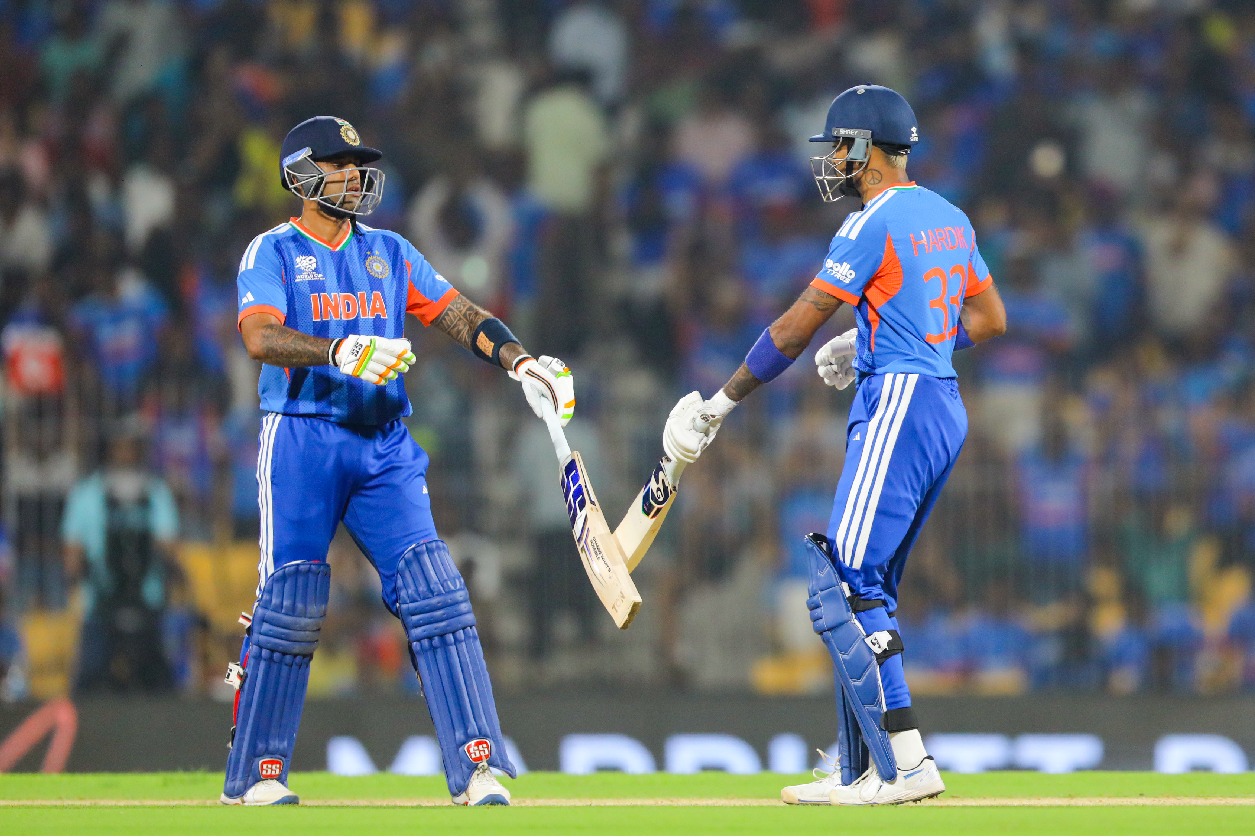
India's Record-Breaking Blitz: Pandya and Tilak Ignite Chennai
The ICC Men's T20 World Cup Super 8 clash between India and Zimbabwe at the iconic MA Chidambaram Stadium in Chennai delivered an absolute batting spectacle, as India posted a monumental and potentially record-breaking total of 256 for 4 in their allotted 20 overs. This stunning display of power-hitting was spearheaded by blistering half-centuries from all-rounder Hardik Pandya and young sensation Tilak Varma, leaving Zimbabwe with an Everest-like target of 257 runs. The high-stakes encounter, part of the ICC Men's T20 World Cup 2026 series, showcased India's formidable batting depth and aggressive intent from the very first ball.
Zimbabwe won the toss and elected to field, a decision they might have quickly come to regret as India's batsmen unleashed a relentless assault on a flat Chennai pitch. From the very outset, it was clear that India had come with a clear strategy to dominate, aiming for a total that would put the opposition under immense pressure. The resulting India vs Zimbabwe T20 WC: India's 256/4 Dominates Super 8, marking one of the highest totals ever seen in the tournament's history.
A Symphony of Sixes: India's Innings Unfolds
India's innings was a masterclass in T20 batting, characterized by aggressive intent and calculated risks. The tone was set early by the opening pair of Sanju Samson and Abhishek Sharma. Samson, donning the wicketkeeper's gloves, provided a quickfire start with 24 runs off just 15 balls, featuring 1 four and 2 sixes at an impressive strike rate of 160.00 before falling to Blessing Muzarabani. His dismissal, caught by Burl, brought Ishan Kishan to the crease.
Abhishek Sharma was the first to truly accelerate, smashing 55 runs off 30 deliveries. His innings was a delight to watch, peppered with 4 fours and 4 towering sixes, showcasing a superb strike rate of 183.33. Sharma's partnership with Kishan kept the scoreboard ticking at an alarming rate for Zimbabwe. Kishan himself contributed a vital 38 runs from 24 balls, including 4 fours and 1 six, before being caught by Ngarava off the bowling of Sikandar Raza.
Even after losing the settled openers, the flow of runs remained uninterrupted. Captain Suryakumar Yadav, known for his audacious 360-degree hitting, lived up to his reputation. He hammered 33 runs off a mere 13 balls, a whirlwind innings comprising 3 fours and 2 sixes, boasting an astonishing strike rate of 253.85. His dismissal, caught by Musekiwa off Richard Ngarava, momentarily offered Zimbabwe a glimmer of hope, with India at 172 for 4 in the 14.5 overs.
However, the best was yet to come. The final five overs witnessed an absolute carnage as Hardik Pandya and Tilak Varma joined forces. Their unbeaten partnership was nothing short of extraordinary, pushing India's total beyond all expectations. Pandya reached a scintillating half-century, remaining unbeaten on 50 runs from just 23 balls, decorated with 2 fours and 4 colossal sixes at a strike rate of 217.39. Not to be outdone, Tilak Varma played a breathtaking cameo, scoring an unbeaten 44 runs off a mere 16 deliveries, laced with 3 fours and 4 sixes, achieving a staggering strike rate of 275.00. This late surge completely deflated the Zimbabwean bowling attack and sent the Chennai crowd into a frenzy.
The india vs zimbabwe scorecard clearly shows the sheer dominance of the Indian batting lineup, with nearly every batsman contributing significantly at an exceptional strike rate. The 12 extras, including 7 wides and 1 no-ball, further added to Zimbabwe's woes, indicating a struggle for control.
Zimbabwe's Bowlers Under Siege: A Day to Forget
For Zimbabwe's bowlers, it was a day they would quickly want to erase from memory. Despite the early breakthrough by Blessing Muzarabani, who picked up Sanju Samson, the attack struggled to contain the relentless Indian onslaught. Muzarabani finished with figures of 1 for 43 from his 4 overs, an economy rate of 10.75, which was among the better returns for his side.
Richard Ngarava, a key pacer, bore the brunt of India's aggression, conceding 62 runs for 1 wicket in his 4 overs, with an economy rate of 15.50. Tinotenda Maposa was even more expensive, going for 40 runs in just 2 overs at an economy of 20.00, though he did claim the crucial wicket of Abhishek Sharma. Sikandar Raza, the captain, managed to pick up Ishan Kishan and was relatively economical compared to his teammates, giving away 29 runs in 3 overs at an economy of 9.66. The full india vs zimbabwe scorecard highlights the struggle of the Zimbabwean bowlers to find a rhythm or contain the flow of boundaries. Even Evans and Bennett, who bowled with slightly better economy rates, couldn't stem the tide of runs, leaving the fielding side in a state of disarray.
This match served as a stark reminder of the challenges of bowling in T20 cricket, especially against a top-tier batting lineup on a batting-friendly surface. The absence of maidens and the high number of boundary balls meant constant pressure and limited opportunities to build dot balls or create wicket-taking chances.
Zimbabwe's Valiant Chase: An Uphill Battle
Chasing an imposing target of 257 runs, Zimbabwe's innings began with the weight of history against them. As the chase unfolded, the task became increasingly daunting. At 15.1 overs, Zimbabwe stood at 137 for 2, needing a monumental 120 runs from just 4.5 overs with 8 wickets in hand. This translates to an almost impossible run rate of over 26 runs per over, making a victory highly improbable.
However, amidst the immense pressure, opening batsman Bennett played a remarkable innings, providing a glimmer of hope for the Zimbabwean side. He remained unbeaten on a valiant 78 runs off 48 balls, decorated with 6 fours and 5 sixes, striking at an impressive 162.50. His knock, though likely in a losing cause, showcased resilience and skill against a high-quality Indian bowling attack. He was ably supported by captain Sikandar Raza, who joined him at the crease and was not out on 25 runs off 15 balls, including 1 four and 2 sixes, demonstrating his customary aggressive style.
Earlier in the chase, Tadiwanashe Marumani (20 runs off 20 balls) and Dion Myers (6 runs off 9 balls) provided some initial resistance, but their dismissals by Axar Patel and Varun Chakravarthy respectively, meant the run rate steadily climbed out of reach. India's bowlers, despite the high target, have managed to maintain a decent economy for the most part, with Arshdeep Singh and Hardik Pandya bowling tight initial spells. Jasprit Bumrah, India's ace pacer, also kept things relatively tight. Varun Chakravarthy and Axar Patel picked up the two crucial wickets, controlling the middle overs effectively. However, a solitary over from Shivam Dube went for an expensive 26 runs, highlighting how quickly the game can change in T20s.
While a victory seems out of reach, Bennett and Raza's fighting display demonstrates the never-say-die attitude of the Zimbabwean team. This match will undoubtedly be a learning experience for them, especially regarding how to approach such a colossal chase. For more insights on the challenge ahead for Zimbabwe, you can read Zimbabwe Chasing 257 vs India: Can They Pull Off a Miracle?
Key Takeaways and Strategic Insights
This high-scoring encounter in Chennai offers several key strategic insights for T20 cricket. Firstly, the importance of a strong powerplay start cannot be overstated. India's initial assault laid a robust foundation for the later fireworks. Secondly, maintaining a high strike rate throughout the innings, particularly from the middle-order and finishers, is crucial for setting massive totals. Players like Suryakumar Yadav, Hardik Pandya, and Tilak Varma epitomized this by consistently finding boundaries and rotating strike effectively.
For bowling sides, the challenge of defending on flat tracks requires meticulous planning, precision, and the ability to execute variations under extreme pressure. While Zimbabwe's bowlers struggled, the match underscores the need for death bowling specialists and smart field placements to contain rampant batsmen. On the batting side, even when faced with an insurmountable target, individual brilliance like Bennett's can provide valuable experience and boost morale for future matches.
The MA Chidambaram Stadium, known for its spin-friendly pitches in Tests, has shown it can also produce batting paradises in T20s, especially with the modern aggressive approach. The captains' decision at the toss often hinges on understanding these evolving pitch conditions.
Conclusion
India's record-breaking total of 256 for 4 against Zimbabwe in the ICC Men's T20 World Cup Super 8 clash stands as a testament to their batting prowess and aggressive intent. Fueled by stunning half-centuries from Hardik Pandya and Tilak Varma, along with significant contributions from Abhishek Sharma, Ishan Kishan, and Suryakumar Yadav, India has set a virtually unassailable target. While Zimbabwe's Bennett has fought valiantly, the sheer magnitude of the run rate required means India is firmly in the driver's seat to secure a dominant victory. This performance not only strengthens India's position in the tournament but also sends a strong message to other contenders about their explosive capabilities. The india vs zimbabwe scorecard will be etched in memory as a display of T20 batting at its absolute finest.